Archived entries for just thoughts

Social Reading: Hey, did you know…

I know I’m not the only one who yet to adopt an eReader. I accept the fact that there are more and more cool devices out there for reading, from Kindle to Nook to Sony Reader to the latest, Kobo. Then there’s a host of social reading platforms, from the Washington Post Social Reader (a free Facebook application that offers a new way to read news — with your friends) to The Guardian‘s Facebook app (which by Dec 2011 was installed by more than 4 million users and drove up daily page impressions by almost 1 million). Google even joined in the fun with Google Currents.

What drives this latest craze? Is it because people like book clubs so much? Let’s define “social reading” first (or L.A. Times more appropriately asked “What the heck is ‘social reading’?”):

Look ahead: The presents have been opened, wrapping thrown away, and for a few quiet hours you’ve been curled up reading the new Steve Jobs biography, a gift from your dad. You find a surprising detail and call to your significant other, “Honey, did you know …?” but because he is busy making dinner, the idea fizzles away as you turn the page.

Or maybe when you get to that passage, with the swipe of a finger you highlight it and email it to your dad, adding a thanks for his gift. Or you click to add your thoughts to a chorus of readers who found that same passage interesting; or you check to see if there’s a link to a video clip; or you find an annotation from the author; or you post it to Twitter or Facebook or Google+, where others can comment on it too.

That’s called “social reading,” and it’s coming to an e-reading app or device near you.1


It’s not hard to believe that people want to share what they have read with other people and receive feedback about their thoughts and ideas. Technology is the great enabler for social reading, and the natural place for this activity to cultivate.2 I get it when it comes to news such as the case with Washington Post, The Telegraph and NY Times’ Recommendations. It’s discussion on current events, policies and the market. And it’s “happening right now.” But I guess there’s a need to opine on everything, even when it comes to chick lits, just like in a traditional book club.

Let’s take a look at one of the latest “club”: Copia, which bills itself as a Social Network for Book Lovers. It’s a social media and content delivery platform that brings together content, community and commerce to create an environment where users collaborate, socialize and buy content. Copia is accessible across a broad array of digital devices and platforms including Mac, PC, Android, notebooks, netbooks, iPads, slates, smart phones and eReaders.

With a tagline of “Reading reimagined for the iPad™” Copia wants book lovers to love it (because every book lover apparently has an iPad. Well, except me). It combines everything you love about the iPad with the most advanced social reading experience. Essentially, apps are increasingly being developed to enable users to electronically share thoughts.

Putting my reservations aside, Copia seems to offer lots of nice doodads like featured/most active groups, creation of notes, combining e-commerce & social. In addition to syncing your spot in a book, taking notes and highlighting excerpts, Copia lets you connect with other users. You can view notes that friends have made in the margins of a book, or join Copia Groups (essentially e-book clubs) and share recommendations. Copia has many of its own social networking features, but it also can connect with Facebook, Twitter and LinkedIn.3

I like to note that there are some bright and useful elements in these eReaders & social reading platforms, especially from Kobo and Copia, for UI designers and app developers to consider in a community /application design. It’s definitely a lot more user-friendly if used for eBooks but nice UI for the iPad & Desktop Reader.

Before I end this thought, I’m adding self-publishing factor into the mix. There are many out there as well but I like BookBaby, which throws open the doors to the electronic publishing and distribution world for independent authors, offering affordable short-run book printing with the highest pay-out rate for eBook distribution in the industry.

Now that makes it real interesting: BookBaby not only publishes for Kindle, Nook, Kobo and Copia (and distributed by the latest two partners), authors can also create custom-printed version of your book, with your own design! Bookbaby Print utilizes the latest layout and bindery technology, along with the highest quality paper, bindery stock and printing processes to produce books that are guaranteed to delight authors and their readers. Yes, don’t throw this baby out with the bath water!

So does this mean “gone are the days of “selfish,” private reading: reading alone in the bathtub, alone under the covers, alone on the couch, alone in the park, etc.”4? It’s still hard for me to swallow that idea, that reading doesn’t have to be a solitary activity. I really like my analog paper.

p.s. A look at using social reading for education. It’s in the form of collective reading that characterizes early reading instruction, where reading begins as a social experience. Now that’s something I can stand behind!

_________________________

1L.A. Times: What the heck is ‘social reading’?

2,4Tame The Web: Allison Mennella – What is “Social Reading” and why should Libraries care?

3Switched: Copia, A Social E-Reading App, Quietly Launches 


Why I Haven’t Been Here Much…

I never thought I’d be one of those “good people” who volunteer every chance they got or build a well in Africa or even buy a Snickers bar from a kid on the subway. Definitely not a do-gooder. But I work hard at every job I’ve had and nobody I’ve worked with ever said I don’t bust my ass every time. When I was asked to produce, I stepped up to the plate and hit. Even with a blog I didn’t mean to create, I stayed late after business hours to write a post every so often because I feel like I have to stick to a schedule (even though I don’t really have a “schedule” schedule). I tried to write a post every week and if I slacked off, it’s every 2 weeks.

So what happened this past 6 months? Let me start from the beginning.

How this blog got started

When I started this blog, the purpose was to try installing and tinkering with WordPress on a Windows box. (And to show my developers that yes, I still got it!) That’s probably why it is called “Red Pepper Flakes” because I didn’t have much thinking behind it.

As you can see, I didn’t get the URL – some flaky-and-now-defunct cooking site had it. I didn’t bother with a logo – I wanted it to be a bit old school with a touch of web-font-friendliness despite being a “creative” person. Plus, I was sick of making logos for the sake of making logos. I like spicy food and I put red pepper flakes in everything so that kind of worked. I’m also known for my quick witted, sarcastic remarks and oft off-color tones which I fired out of my mouth pretty consistently. So Red Pepper Flakes it is and I started blogging .

I wrote about things I found interesting, from design to technology to art to people. There are no rules (it’s me talking about whatever I feel like talking about), no chest-thumping client work (if it’s something I’m proud of, yes, I will gladly put a disclaimer). I thought it should be educative and enlightening at times – where I share my analysis of certain trends in the industry (I do it at work anyway) and share new trends I find interesting. I also like to share brilliant work from talented people – one of those “I wish I did that/I hate you for being so good” moments – as well as funny amusing things people do.

I started gaining traction with certain group of people – designers mostly, or people who think my Industry Roundup series were useful so they don’t have to do the research themselves. And then I got sidetracked. Hard.
Sidetracked

If you noticed, I started writing a post every 2 weeks, then a month, then longer. Of course as a partner at a small agency, you do more when the economy is this dreadful. RFPs kept coming in, proposals kept going out, meetings kept getting set up and we kept churning out great award-winning work. Clients get smarter – and pickier – and everything just becomes more time-consuming. But that’s not it either (I can always take the hard work and pressure from the job – piece of cake).

Something happened in July. I went to bed with my mind churning. You might think it’s about the most menial thing but it was about my dog, a rescued pit bull. And I woke up with the idea for “I’m Not a Monster.”

What is I’m Not a Monster? I’m Not A Monster is a place where pet parents of so-called “mean” dog breeds can show how lovely these dogs are and how much they change their pet parents’ lives.

This project started as part of venting my frustration around having a “mean breed” pit bull. Yes, I live with one of those mean, man-eating beasts. Rosco is a rescue. My husband took him off a man who was beating and kicking him in Brooklyn, NY. He was a 10-month old puppy then and was malnourished. We weren’t planning to get a dog but we are dog people and we just can’t let him stay with his previous owner or surrender him to a shelter.

And like I said, I’m not one of those people who volunteer at the shelters. But I spoiled my dog rotten, from feeding him only premium dog food and treats (I’m plugging my client, Wellness Pet Food, here) to letting him take over the couch and bed.

But when family members heard that we got a pit bull, the first reactions were either “you have to get rid of him” or “you have to put him down” accompanied by horror stories of the menacing pit bulls that mauled kids and attacked for no reason. I had a Rottweiler previously (good ol’ Guinness who passed in 2007) and I have gotten the same reaction. People forget that it’s not the breed, it’s the owner. People who breed and train them for protection or fighting are the culprits who made these large, strong breeds the menace of society.

So that’s how I got started. Just as a “cute” idea to shut the idiots up. Before I knew it, it seems to have a life of its own.

The Monster That Occupies My Life

I didn’t think I’d get many stories from people I don’t know. Of course I created a Facebook page and a Twitter account – that’s just something we do when we create a website, right? And I got a couple of stories from people I know (one is a coworker and another a friend’s coworker). So I thought, I should reach out to other pit bull-type dog owner on Facebook. But I didn’t think that people would respond with such enthusiasm.

Before long, I was buried in stories and my Facebook page grew by at least 100 likes a week. What humbled me is the thank you’s I received for every story I published. It’s as if these pet parents (who mostly rescued their dogs from pitiful existence) have been waiting for I’m Not a Monster to come along. But the most eye-opening experience is to learn the horrible facts these “monsters” endured: Dumped, tortured and murdered. Yup. People hate them. The media? They hate them too.
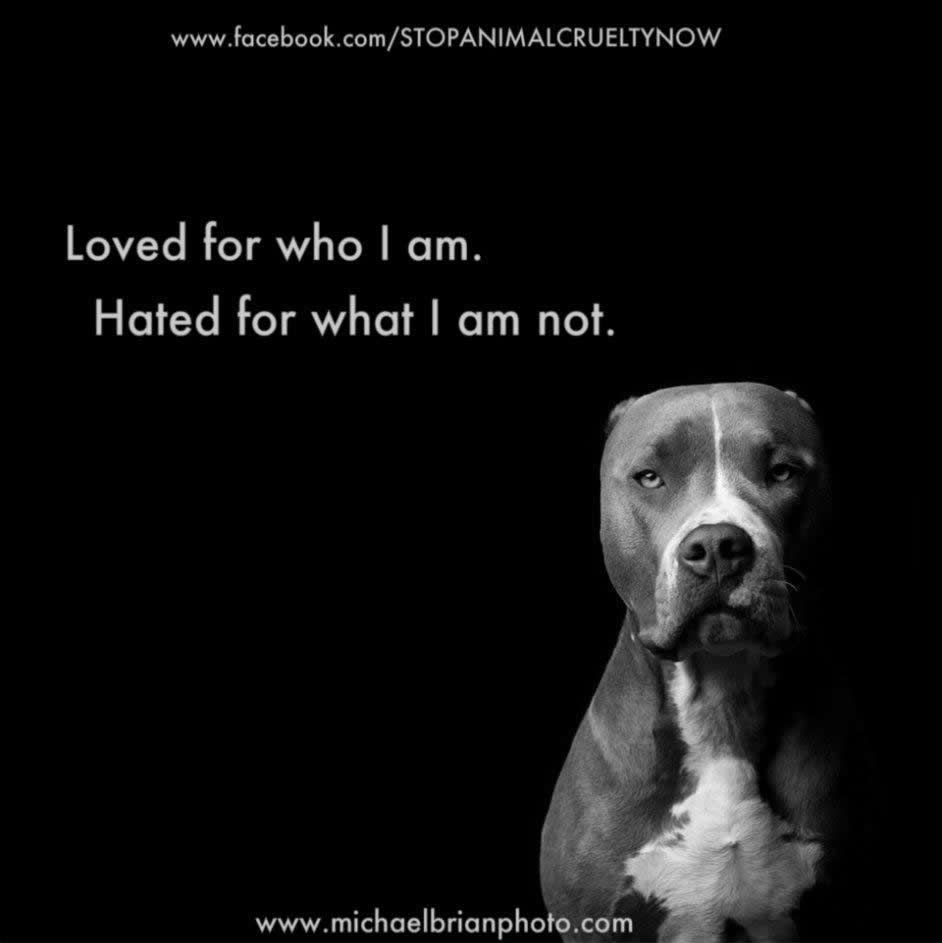
I’ve learned about the overpopulation issue, puppy mills, shelter overcrowding, Breed-Specific Legislation (BSL) to ban pit bull type dogs across the US (well, UK too), tortures, gas chamber mass murders, inhumane heart stick murders, PETA and its lies… The list goes on and on and on… And then I realized I couldn’t just stand on the sideline anymore.

I started using the Facebook page’s reach to educate the public, network animals in need and share rescues needing transports, money, food, media attention…One by one, my nights become hours of story editing, posting news, sharing and networking people to reach out to various shelters across the nation to spare a life.

Yes, a dog’s life.

So I lost sleep night after night for a dog or two. I felt angst going to bed if a dog is not yet taken off the Euthanasia list. I check my Facebook first thing in the morning for updates on these dogs. And yes, I stopped caring so much about which design or trends are cool and worth blogging about. It may be laughable to you, but to me, it’s worth it. And if you’re never on this side, you won’t really get it.

Yup. My life has gone to the dogs!

p.s. You may not see me here for a while. I may pop up here and there for air. Or you can drop by I’m Not a Monster. :-)

BBC 3.0

Remember the brouhaha over BBC redesign last year? Apparently a lot of people are just not loving it. According to the Guardian article Website users give BBC News redesign grief (and anger, and bargaining…), “the responses sometimes look like the five stages of mourning.” A hefty 4,242 comments have been published in response to the well-intentioned posts in the past 16 days, most spitting feathers but some leaving questions yet to be answered.

Although BBC claimed it lived with and loved the distinctly ‘web 2.0′ design for a while now and it’s done them proud, it time to move on and before the end of  last year they resurrect the redesign project.

BBC stated:

We set out to broaden our ambitions; to create a design philosophy and world-class design standards that all designers across the business could adhere to. We wanted to find the soul of the BBC. We wanted something distinctive and recognizable; we wanted drama. We knew whatever we created needed to be truly cross-platform and that we needed to simplify our user journeys.


This is where Neville Brody and his agency, Research Studios, comes in. have collaborated closely with the BBC to redesign their online Global Visual Language (GVL) and take the organization and its users into a more compelling digital space. At the heart of the project was the joint desire to bring joined-up cross platform concepts and experiences to users of bbc.co.uk and bbc.com now and into the future.

Here’s their recap:

After four months, countless hours and countless iterations of designs, components, mastheads, footers, polar maps, word documents, PDFs and grids…, this is the latest in BBC’s design philosophy and the latest version of their global visual language styleguide.

The team wanted to create a design philosophy, or a set of values, to unite the user experience practitioners across the business. They settled on nine keywords which we think sum up what we’re about and what they’re trying to achieve:

Modern British
We want to create a modern British design aesthetic, something vibrant and quirky that translates outside our national boundaries.

Current
It needs to feel current and reflect what’s happening in the UK right now, in real-time. We curate a timeline of Britain and create links to the past – to our rich archive.

Authentic
Wherever we are heard we need to sound authentic and relevant, warm and human. We want to reference the BBC’s iconic design and broadcasting heritage. We value the trust placed in us.

Compelling
We engage our audiences with compelling storytelling. Our voice ranges from serious and authoritative through to witty and entertaining.

Distinctive
We stand out from the crowd. We strike a balance between overly templated, cookie-cutter design and beautiful anarchy. We are bold and dramatic.

Pioneering
We pioneer design innovations that surprise and delight. But we take our audiences with us.

Joined-up
We view all services and platforms as one connected whole but deliver experiences that are sensitive to their context of use.

Universal
Our services are open and accessible. Our interfaces are simple, useful and intuitive.

Best
Our ambition is to be the best digital media brand in the world.


Armed with the new philosophy, they began creating conceptual designs for various properties: BBC news, homepage, search, iPlayer, program pages and the embedded media player.

Through doing this work we began to distill the essence of a new visual style. Here are some of the key elements, starting with the page grid.

The new grid is based on 31 sixteen pixel columns with two left hand columns that can be split into four, and one wider right hand column, which accommodates the ad formats that appear on the international facing version of the site.

11-grid.jpg

They’re looking to create the effect of interwoven vertical and horizontal bands, making a feature of the right hand column across the site.

12-grid.jpg

Along with the 16 pixel vertical grid they’ve also for the first time got an integrated 8 pixel baseline grid so that they can align elements on a page both vertically and horizontally.

13-baseline.jpg

A key feature of the new GVL is a much more dramatic use of typography. As well as Gill Sans they’ve introduced big bold type in Helvetica or Arial and restricted variations in size so that they have much greater consistency across the site.

14-type.gif

They’ve developed a highlight colour palette for non-branded areas of the site, or areas where the BBC masterbrand talks directly to the audience (e.g. the BBC homepage, search, some of our genre areas). Each color has a tonal range to be used in contrast or in unison with each other.

20-colour.jpg

_________________________

The redesign covers a lot of grounds. It goes to show you that it’s not just a “re-skin” as clients like to call site redesigns, which often times gets me going.

A website redesign is not just changing colors and moving things here and there; It’s analyzing the existing website and the interactive landscape, looking at comparable companies within and outside the industry, and exploring potential improvements based on best practices and audience expectation.

If you do it right: It’s not just a redesign. It’s a rebirth.

To read more: A new global visual language for the BBC’s digital services

Time To Stop Lorem Ipsuming


Lorem Ipsum has consumed our creative juices. It’s time to stop.

_________________________

Lorem Ipsum has been the print industry’s standard dummy text for at least five centuries by some unknown printer. It was popularized in the 1960s with the release of Letraset sheets and, in the last decades, by desktop publishing software like Aldus PageMaker. But I’ve about had it! Designers, Lorem Ipsum makes your brain lazy.

Designers relied on Lorem Ipsum to fill up their beautiful design interfaces. I’ve dealt with design projects where I see designers showing me designs with nice bells & whistles but very little substance. I hired designers based on their portfolio—most coming fresh from great design programmes—which showed great promise of creative ideas and executions. However, a lot of designers fell into the rut of daily designer’s deliverables: They came up with great designs, tackle the creative challenges as far as interfaces go, but fell short in embodying the brand they are designing for.

Some of you may ask “So what?” and here’s my answer:

Words are a great passion of mine. I was one of those designers who think beautiful designs will allow me to express the brand, and until I get the content from the client, FPO will do. And that isn’t just limited to images. It affects copy too. Then I found that the client gave me the copy from their existing website. And it’s crap. So I ended up where I started. That’s when I realized that design has to be jump-started with the right copy.

A lot of web designers in today’s generation do not have the experience of working in the “old school” form of creative environment: Ad firms, where you sit in the room for hours and came up with the right taglines, the right keywords, the right “feel” for the brand. I was lucky to be briefly involved in one where I learned that words are a powerful thing.

Words make you form an idea, a state of mind, a brand. As a starting designer a decade ago, I often came up with fun filler copy to get a chuckle out of the clients, which was a bonus because most of the time it came from my research efforts to understand the client more. Mind you, this was the day before every brand had a website. I found that the research helped me understand the brand better and by writing my take on it, made my design better and my client happy.

With that in mind, as years go by and my responsibility greater, I started writing the copy for website contents to help my designers come up with the right design, starting from the smallest design elements. And it helps.

With a creative brief, my designers see what the client wants after we aligned and realigned their brand presence. However, creative briefs often left a big hole in “What should the website really say?” department. It may be the smallest details, but for the client, every little things matter. And it should.

We, as the creative agency, should be the one responsible for helping the client shape their brand. The right word, the right call to action, the right user experience.

I often sit at my desk, hunkered down, reading lines and lines of the client’s brand documents, doing environmental scan and researching what is said about them. And that helped spark that little spot in my brain that made me go, “Ooh! This is what we should be doing!” And that’s not an image or a color or a page layout. It’s a few words forming the right positioning for the brand. And that makes a heck of a difference. The right positioning makes your client know you’re thinking and breathing their brand, and that you are being their advocate. I’ve had a client who loved a section name we came up with in the first design round. He was so happy he used the word “love.” That’s when you know you got it right.

So go ahead. Write something. Write something great. It’s worth your while.

p.s.: However, if you HAVE to use Lorem Ipsum (sigh…), you can find some options here. Don’t forget to check out Gangsta Lorem Ipsum if it fits your personality better.

Better Views For My Social “News”

Breaking the layout “gray area” in online news streams world.

_________________________

In graphic design classes, you are taught to be friends with the white space, ensure your design has clear entry points, and—my personal favorite—break the gray area. Yes, this is from print design classes I took circa 1995 since interactive design (aka “multimedia”) had yet become a field of study.

Your challenge is a white spread of paper, figuratively and literally, and you have to put all that content in there. Usually that means flowing copy in odd-numbered columns (or now you kids call it “grids”) to create a visually appealing layout. All that crammed up copy becomes “gray areas” and your eyes don’t want to stay on them. It creates what’s called “reading fatigue”—you don’t want to read a long article on The New York Times unless you’re really into it—and that’s why god created focal points, white space and pagination to fight gray areas.

The gray area challenge stays true today with most social media interfaces like Facebook and Twitter. What also is true is the fact that web users don’t read, or more accurately, don’t read most of the copy in front of them. They skim the content, waiting for some words or visuals to grab them.

That’s why content visualization is key in my book. The good kind, of course, and here are some products out there that makes my eyes happy and my visual browsing experience better:

PostPost

PostPost offers an alternate content visualization method for your Facebook. It takes your Facebook news feeds, i.e. links your friends and Pages shared, and lays them out as stories in a newspaper-like display. The design feels familiar—yup, it’s very much like the current trend of displaying feeds in boxes with large image or video and some copy blurb (e.g. The Huffington Post or Times Skimmer from The New York Times, below).

Each “news” bucket is more user-friendly and social-friendly: You can delete news you don’t want via the standard “X” button, videos play in-line and, as quickly, share / like / comment on it. The interface is simple and the user experience is conducive to the ever-impatient social media consumption.

PostPost creator, Peter Yared, sees it as the natural evolution of content consumption. “Instead of displaying what an algorithm on Google, strangers on Digg, or an editor on The Huffington Post surface, we show what your friends think is interesting.”1 And hopefully triggers social conversations between friends.

And back to the point of this post, it is definitely a better layout, nice visuals acting as clear entry points broken by enough “white space” to actively engage your eyes.

For a look into PostPost, its features, technology and future, read Inside Facebook‘s review.

Paper.li

Paper.li is a news aggregation service for your Twitter. It visualizes the feeds from either the people you follow on Twitter, a Twitter search, or a Twitter list and puts them together like a newspaper. The interface is straight-forward and clean.

Unlike PostPost which requires you to log into your Facebook account to pull your feed, you don’t have to create an account to use Paper.li if you want to read other-created papers. You can search available papers by name, categories, interests and more. Checkout Netflix’s Paper.li using hashtag: http://paper.li/tag/netflix

I like the novelty of it and I appreciate any content visualization method created to improve content absorption. Yes, they can improve the refresh rate, which is limited to daily update instead of PostPost’s real-time update. Yes, there are things to improve upon (read Jason Keath’s hate letter) and yes, there are a lot of nice things that can potentially make Twitter news stream visualization better (read Boost All’s love letter)

For a thorough review of Paper.li, read PC Magazine‘s write-up.

It definitely beats reading rows and rows of 140-character tweets without any discerning way to distinguish content. Looking at the Twitter avatar doesn’t help me in figuring out what the tweet is about.

Times Skimmer

Before the iPadization of web design, The New York Times came out with Times Skimmer in February. This browser-based application offers online readers a new way to read paper. The interface now looks very familiar, with the fluidity of spreading out the content according to your browser window size just like spreading a newspaper as well as paging through it.

Clean, simple and to-the-point, it’s a better way to “skim” the news. Apparently, it is a precursor to the Times’ Chrome app, which became available two weeks ago.

If all these skimming techniques work well, who knew? We may not even want to read the real paper anymore.

We’ll have to look up Google images to find a screenshot of the Times’ paper and say, “Remember this?” to the future generation.

For more on the Times Skimmer:

Conclusion:

In the age of curated consumption, does what your friends know make it valuable? That’s for you to decide. This Facebook vs. Twitter 2010 stats from ZDnet may help you.

I have to admit, these are some starting points to better content visualization for your news feed. Some may call them curated content although I consider them simply as news aggregators. What I like most about PostPost is its real-time updates, which is the main complaint people have on other visual news aggregators such as Paper.li and iPad’s Flipboard.

Well, you have to start somewhere, right? And I like the way this is going for the sake of better design and better user experience.

_________________________

1Inside Facebook: PostPost Turns Facebook Links into a Socially Curated Custom Newspaper

Photo credit for old newspapers: ShironekoEuro


Red Pepper Flakes © 2008 - 2011. All rights reserved.

RSS Feed Content by Imelda Suriato